

Mental Health Support Team
Mental Health & Well-Being
As a Rights Respecting School, we recognise that children need to feel emotionally safe to reach their full potential.
- Article 29 of the UNCRC: Every child has the right to develop their talents and abilities.
- Article 24 of the UNCRC: Every child has the right to access healthcare when needed.
To support emotional well-being, we foster emotional literacy through PSHE lessons, our autumn focus on the Zones of Regulation, and dedicated Mental Health & Well-Being Days each term.
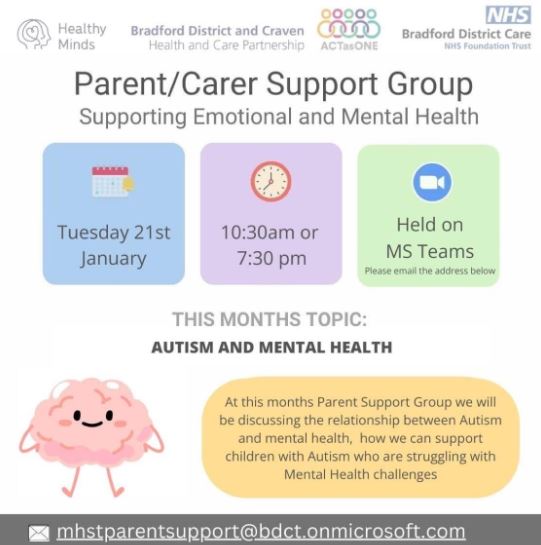
We are privileged to collaborate with our local Mental Health and Support Team, including Hannah Cairns, a Senior Mental Health Practitioner.
craven newsletter spring 2025.pdf
Visit our Values and Ethos page to see these in action throughout our school.
My Happy MInd
As a school, we use the My Happy Mind programme, within our PSHE taught curriculum and as part of our behaviour management. My Happy Mind is based around helping children to understand how their brain works. It supports them in developing positive skills and habits to be their very best selves!
myHappymind is delivered in schools by class teachers through a series of interactive lessons and then the children apply these learnings throughout the day.
To further embed this learning, myHappymind has developed a Parent App. These resources can be accessed online on your computer, or through an app on a smart phone. The Parent App will support you as a parent in understanding what your child is learning, activities for you to do together at home and also a Kids Zone featuring myHappymind Games plus much more!
To access these materials please contact the school office.
We really encourage you to make use of this free content so that you can support your child in getting the best out of the curriculum/docs/My_Happy_Mind.pdf.
If you have any questions about myHappymind, please contact your class teacher.
If you want to learn more, then you can check out myHappymind founder Laura Earnshaw’s best selling book on Amazon.
SDG #3 Health & Wellbeing
Article 29 of the UNCRC: Achieving potential
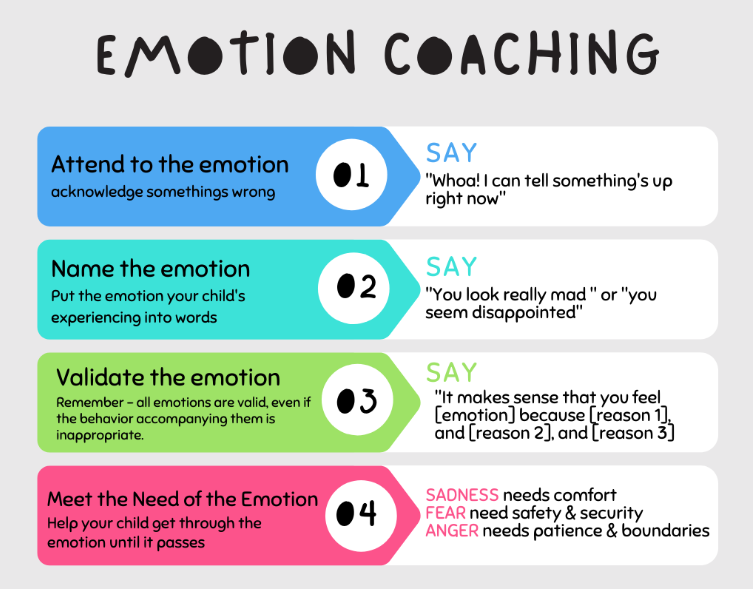
Emotion Coaching
We are also trained in Emotion Coaching. Behaviours are a communication of emotion. The behaviour we can see, observe and that are presented are the tip of the iceberg. What isn’t always obvious are the cognitive processes, the feelings, the motivations, the perceptions that underly the behaviour. The underlying emotions and motivations can be complex, and it can take time to explore what the motivations may be. But because they influence and control the visible behaviours (the visible iceberg), when we spend time considering this, we help the young person to understand why they are feeling how they are, and why they are behaving as they are. Through our relationships with others, we learn to understand the emotions we feel and how to regulate and respond to them in ourselves and in others. Emotions matter to learning, relationships matter to learning, our experiences and environments matter to learning.
The basis of this approach is being able to handle emotions/ emotional awareness will contribute to success/happiness across all contexts. Emotion Coaching is a discrete approach to the promotion of social and emotional skills, which is based on the principles that nurturing and emotionally supportive relationships provide optimal context for the promotion of those skills. Emotion coaching uses moments of heightened emotion and the behaviours that present at those times to guide and teach the child or young person about more effective responses through empathetic engagement with the child's emotional state.